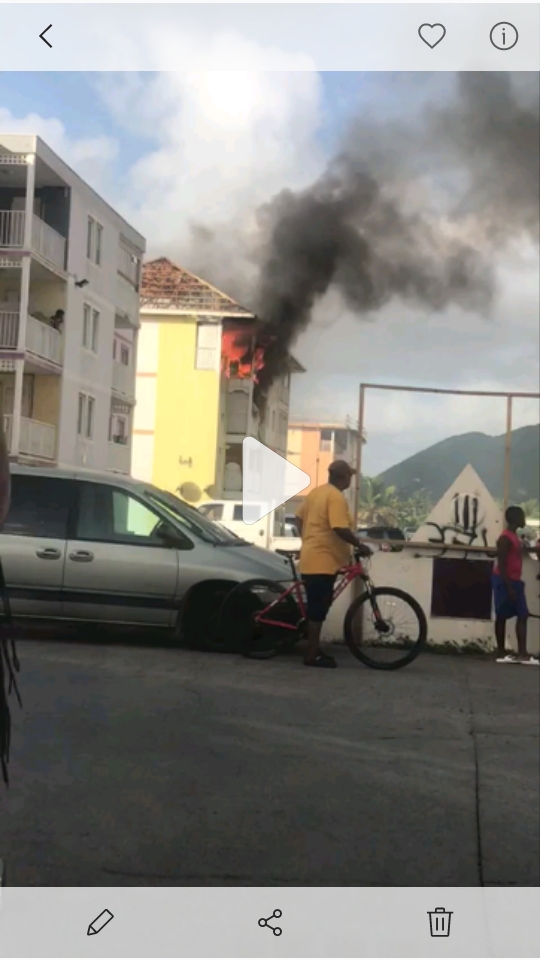
There is a third video uploading now
VIDEO FIRE FRENCH QUARTER ST MARTIN
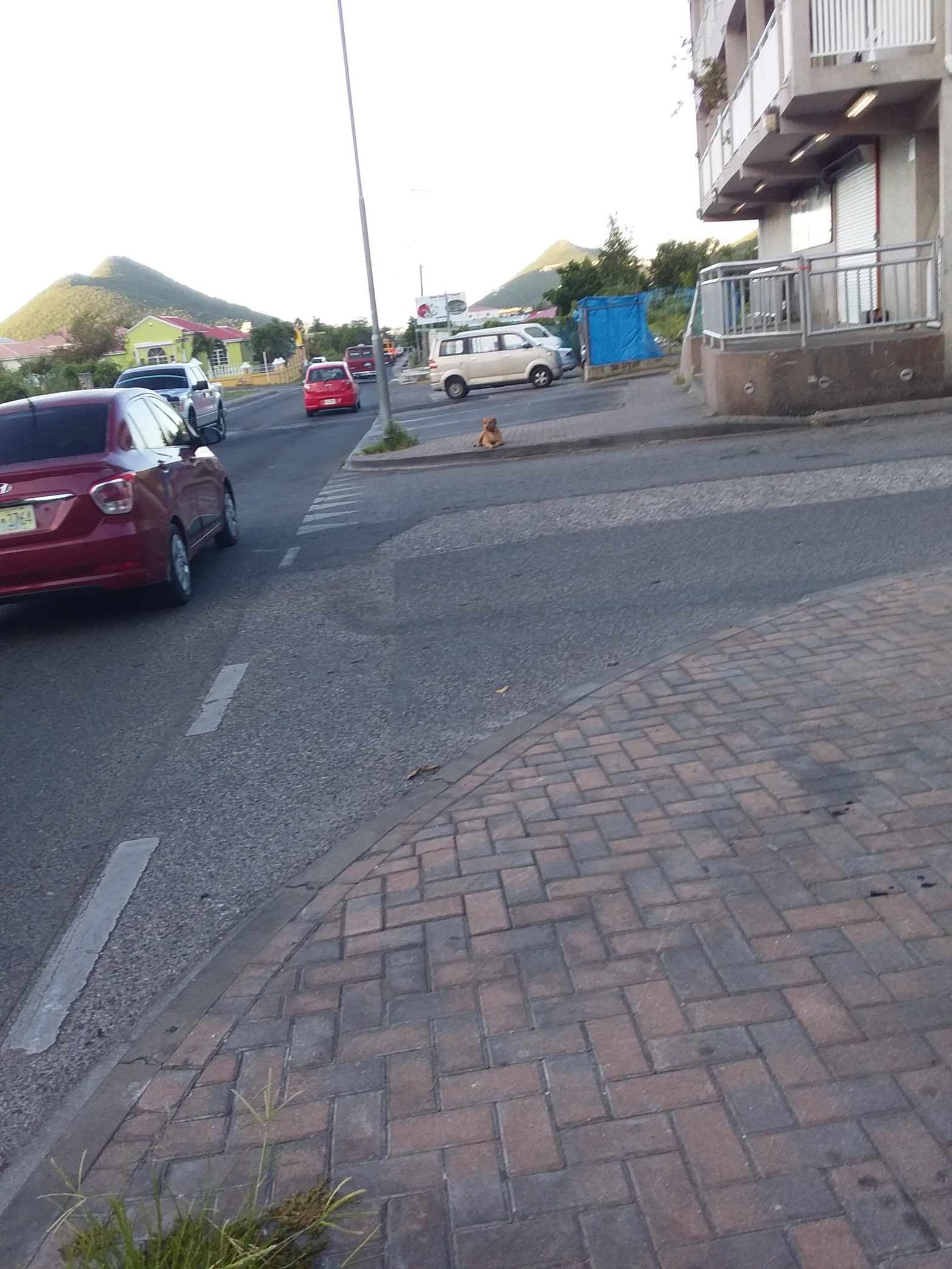
Going on right now
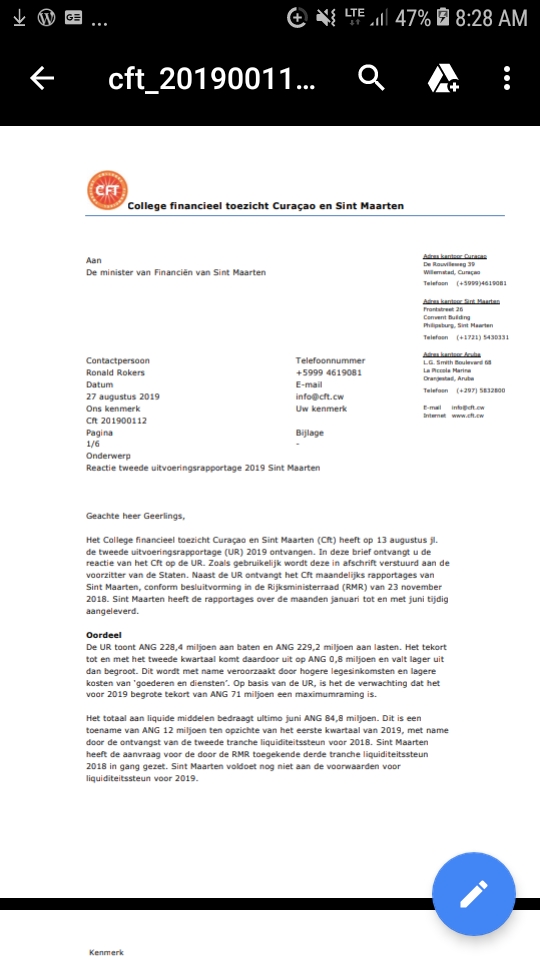
Cft again expresses his concerns about financial management on Sint Maarten
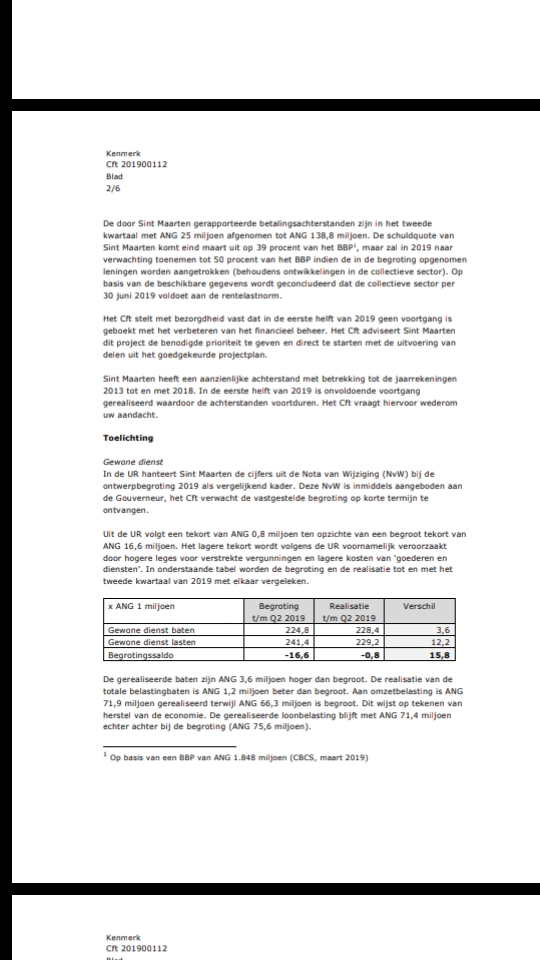

Philipsburg – Based on the financial results for the first half year, Sint Maarten will remain within the deficit of 71 million guilders budgeted for the whole of 2019, according to the Financial Supervision Council.,, The Cft notes with concern that no progress was made in improving the financial management in the first half of 2019.The Cft advises Sint Maarten to give this project the necessary priority and to immediately start implementing parts of the approved project plan, ”writes the Cft to Minister of Finance Perry Geerlings.Sint Maarten has a considerable backlog with regard to the annual accounts 2013 up to and including 2018. Insufficient progress was made in the first half of 2019, so that the backlogs continue.The Cft points out that Sint Maarten still does not meet the conditions set by the Netherlands for new liquidity support.



Sale of St. Maarten shares in UTS almost completed


PHILIPSBURG, WILLEMSTAD – The sale of St. Maarten’s shares in United Telecommunications Services (UTS) is almost completed, St. Maarten Finance Minister Perry Geerlings said on Wednesday.
“The sale of UTS is in the closing stages,” Geerlings said when asked for an update. He said parties had been aiming to sign the necessary documents by this Friday. “The Minister of TEATT [Tourism, Economic Affairs, Transport and Telecommunications, Stuart Johnson – Ed.] signed a ministerial decree yesterday [Tuesday], that was necessary to inform the buyers that there are no outstanding debts between UTS and our Bureau Telecom and Post.
That was still a lengthy process because there were some outstanding debts, but not sure that they can be validated, because these debts stem from the former Netherlands Antilles’ transition period to Country St. Maarten. So that is still being worked out.”
Geerlings said also that Member of Parliament (MP) Rolando Brison’s initiative law authorising government to undertake the sale of St. Maarten’s shares in UTS also had to go through a legal process including being sent to Governor Eugene Holiday for signing to formalise the law. “That is still at the Governor. Hopefully we will get that back today or tomorrow [Wednesday or Thursday].
“I am not sure if we are going to meet the Friday date that we have set for parties involved. If not, then we are probably going to close it in the first week of September, but we are in the final stages,” Geerlings said.
St. Maarten holds 12.5 per cent shares in UTS, while Curaçao as majority shareholder holds 87.5 per cent.
Curaçao has already completed the sale of its UTS shares to Cable and Wireless Communications’ parent company Liberty Latin America. The June 1 deadline for the sale of St. Maarten’s shares has already passed, but after conversation with the buyer some time was granted to St. Maarten.
Geerlings had said during the debate of the 2019 budget that the proceeds from the sale would amount to some NAf. 21 million and from the proceeds, government intended to use NAf. 12 million to reduce its arrears towards the TelEm Group, “as strongly suggested” based on the Kingdom Instruction of 2015. Additionally, some NAf. 8 million will be used to offset expenses for the “yet unknown financial effects of repairing the salary constraints of our own Police Force, as far as this is necessary, retroactive.”
The NAf. 1 million remaining can be used to alleviate social needs of residents and for projects at schools such as a school food programme, or elsewhere, the minister had said at the time. Still expected are the possible proceeds of the sale of the only UTS subsidiary that is not included in the current sale agreement (Blue Nap).
https://www.curacaochronicle.com/post/local/sale-of-st-maarten-shares-in-uts-almost-completed/
LIVE TRACKER- VIDEO Hurricane Dorian menaces Bahamas, heads towards Florida


Hurricane Dorian has gained fearsome new muscle as an “extremely dangerous” Category 4 storm, bearing down on the northwestern Bahamas early Saturday en route to Florida’s east coast.
Millions of people in Florida, along with the state’s Walt Disney World and U.S. President Donald Trump’s Mar-a-Lago resort, are in the potential crosshairs of the hurricane. Forecasters say Dorian, which had top sustained winds of 140 mph (225 kph) Friday night, will threaten the Florida peninsula late Monday or early Tuesday.
But the National Hurricane Center in Miami cautioned that its meteorologists remain uncertain whether Dorian would make a devastating direct strike on the state’s east coast or inflict a glancing blow. Some of the more reliable computer models predicted a late turn northward that would have Dorian hug the Florida coast.
“There is hope,” Weather Underground meteorology director Jeff Masters said.
The faint hope of dodging Dorian’s fury came Friday, even as the storm ratcheted up from a menacing Category 3 hurricane to an even more dangerous Category 4. That raised fears Dorian could become the most powerful hurricane to hit Florida’s east coast in nearly 30 years.
National Hurricane Center projections showed Dorian hitting roughly near Fort Pierce, some 70 miles (113 kilometers) north of Mar-a-Lago, then running along the coastline as it moved north. But forecasters cautioned that the storm’s track remains still highly uncertain and even a small deviation could put Dorian offshore — or well inland.
Trump has declared a state of emergency in Florida and authorized the Federal Emergency Management Agency to coordinate disaster-relief efforts. He told reporters that “Mar-a-Lago can handle itself” and that he is more worried about Florida.
“This is big and is growing, and it still has some time to get worse,” Julio Vasquez said at a Miami fast-food joint next to a gas station that had run out of fuel. “No one knows what can really happen. This is serious.”
As Dorian closed in, Labor Day weekend plans were upended. Major airlines began allowing travelers to change their reservations without fees. The big cruise lines began rerouting their ships. Disney World and Orlando’s other resorts found themselves in the storm’s projected path.
Still, with Dorian days away and its track uncertain, Disney and other major resorts held off announcing any closings, and Florida authorities ordered no immediate mass evacuations.
“Sometimes if you evacuate too soon, you may evacuate into the path of the storm if it changes,” Gov. Ron DeSantis said.
But some counties announced mandatory evacuations ahead of time on Friday. Brevard County and Martin County officials said residents of barrier islands, mobile homes and low-lying areas would be under a mandatory evacuation order beginning Sunday morning. The Brevard County order includes the Kennedy Space Center. Indian River County officials said they will recommend residents of its barrier island voluntarily evacuate once hurricane warnings are issued.
Homeowners and businesses rushed to cover their windows with plywood. Supermarkets ran out of bottled water, and long lines formed at gas stations, with some fuel shortages reported.
At a Publix supermarket in Cocoa Beach, Ed Ciecirski of the customer service department said the pharmacy was extra busy with people rushing to fill prescriptions. The grocery was rationing bottled water and had run out of dry ice.
“It’s hairy,” he said.
Early Saturday, Dorian was centered 470 miles (755 kilometers) east of West Palm Beach. It was moving northwest at 12 mph (17 kph). Forecasters warned that its slow movement means Florida could face a prolonged wallop of wind, storm surge and torrential rain.
Coastal areas of the southeastern United States could get 6 to 12 inches (15 to 30 centimeters) of rain, with 18 inches (46 centimeters) in some places, triggering life-threatening flash floods, the hurricane center said.
The hurricane center’s advisory released at 5 a.m. Saturday also warned that the “risk of strong winds and life-threatening storm surge” during the middle of next week is increasing along Georgia and South Carolina’s coasts.
Also imperiled were the Bahamas, where canned food and bottled water were disappearing quickly from shelves and the sound of hammering echoed across the islands as people boarded up their homes. Dorian was expected to hit the northwestern part of the Bahamas by Sunday with the potential for life-threatening storm surge that could raise water levels 15 feet (5 meters) above normal.
“Do not be foolish and try to brave out this hurricane,” Prime Minister Hubert Minnis said. “The price you may pay for not evacuating is your life.” https://www.wtoc.com/2019/08/31/tracking-dorian-dorian-is-moving-towards-bahamas/
Is it worth the risk to cruise during hurricane season? Yes, but preparation is key
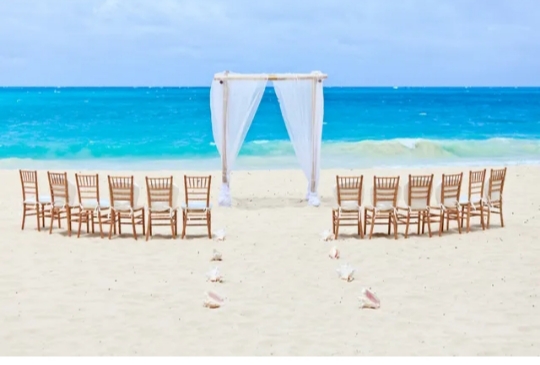
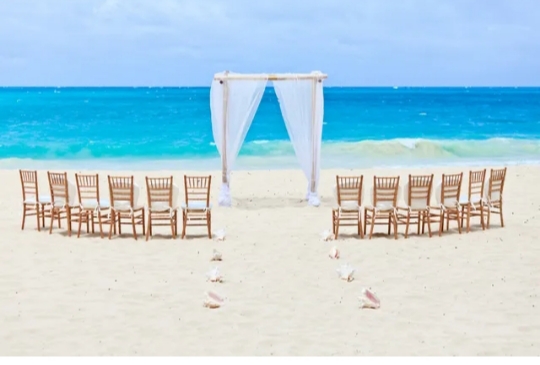
Is it worth the risk to plan a cruise to the Caribbean, Bahamas, Bermuda, Mexican Riviera or even Canada/New England during hurricane season? Absolutely, with one major caveat: To paraphrase a cliche, prepare for the worst – and hope for the best.
Statistically speaking, the chances that your particular voyage is going to be affected by a hurricane are very slim. But changes to your plans are a possibility, and it’s important to approach a hurricane season cruise with the right attitude.
Cruise schedules and itineraries may well be impacted by storms, anticipated or otherwise, but the chances you’ll actually be caught in one are slim to none. These days, solid engineering and satellite equipment allows cruise lines to follow the paths of storms (and quickly send ships elsewhere); Royal Caribbean and Celebrity Cruises are two lines that have established situation rooms – which enable staffers to monitor storms and respond to changing circumstances.
Look for a deal. Discounts abound, particularly in the peak period between mid-July and early October. But this is not the time to make a visit to one particular (scheduled) port a crucial element of the holiday (planning a wedding in St. Thomas or a family reunion in St. Maarten, for instance). Itineraries can be disrupted by even the mere threat of a storm.
Be flexible. Know that you may have trouble getting to an airport in south Florida or in San Juan (where many, though not all, Caribbean-bound cruises depart).
Buy insurance. Whether you obtain insurance through the cruise line or through an independent provider, make sure the policy covers disruption in case of weather-related events.
Hurricane season officially runs from June 1 through November 30. Although hurricanes are generally unpredictable, conventional wisdom has dictated that peak season varies by geography.
In the Eastern Caribbean and along the U.S. East Coast, the season tends to be busiest between mid-August and mid-September. In the Western Caribbean, it picks up in mid-September and stretches into early November. Early- and late-season hurricanes (June and mid- to late-November respectively) are rare but not unprecedented.
An “average” hurricane season means we can expect eight to 11 tropical storms; of these five to seven could develop into full-fledged hurricanes. Note, though, that not all hurricanes strike land.
How safe are cruise ships during hurricanes?
Most likely, you’ll never need to know. That’s because cruise line strategy across the board is to avoid rather than confront a storm. Cruise lines have been operating in the Caribbean for years and have, by virtue of experience, specific hurricane/tropical storm emergency response plans in effect. These cover everything from outfitting ships with state-of-the-art satellites to designating a bridge officer as the weather monitor during the season – and to backing up onboard efforts with expanded staff at headquarters.
What’s trickiest for cruise lines is finding alternate places to dock or anchor when ships’ scheduled ports of call are threatened. It’s not always easy to find replacements not already booked up with regular cruise visitors – particularly when other ships are seeking a quiet port in that same storm. The most common solution is a simple switch – for example, a ship whose Eastern Caribbean itinerary appears to be in flux will be moved over to the Western Caribbean (and vice versa). And if new port calls can’t be sured, the schedule may end up including a couple of extra sea days (in calmer waters, naturally).
Do you get compensated for missed ports? Alas, no. The fine print in your cruise contract, also known as your ticket, gives lines the right to substitute and/or eliminate ports if and when they feel like it. However, you may be entitled to refunds on prepaid port taxes or fees.
Even ships outrunning a storm can encounter rough waters
When the threat of a storm occurs, cruise ships can “outrun” them – storms tend to move at about 8 to 10 knots, while ships can attain speeds of up to 22 knots and beyond.
While increasingly sophisticated technology and mechanics can help ships to evade storms, they can’t avoid them entirely – and you may run into rougher-than-usual waters. You may even experience storm remnants where you least expect to, such as on north Atlantic repositioning cruises coming out of Europe (ever wondered where hurricanes go to die? You guessed it, the north Atlantic).
While they may be tropical storms or even lesser swirlings by the time they reach far off places like Iceland, the waters can still be rough. Be prepared: Even stalwart cruisers should pack a favorite seasickness remedy.
Can’t get to the ship?
Sometimes hurricane-related problems don’t have anything to do with the ship, and everything to do with conditions at the port of embarkation. As we said before, plan ahead. This is a good time of year to build a day or two into your vacation. Aim to arrive in port a couple of days early in case difficulties arise. Prepare for the possibility – and it happens – that you might actually arrive home a day or two late.
Bottom line: If you’re having trouble getting into your port of embarkation make sure you contact the cruise line (carry their toll-free emergency number in your wallet). Most will do everything possible, even if they are not obligated, to help you get to the ship, but there’s no guarantee.
Canceled cruises
Canceled cruises are rare. For the aforementioned reasons, cruise lines will simply deviate itineraries. Pretty much the only time a cruise will be canceled outright is when a storm is aiming for its major port of embarkation, such as Ft. Lauderdale or Miami – and even in such cases, it’s an unusual outcome. More often, departure is delayed by a day or so, and passengers are generally compensated accordingly. If a cruise is actually canceled, you will obviously get a refund. You might also receive a discount on a future cruise.
The Pacific has its own weather issues
The East Pacific hurricane season is oft-overlooked because there are simply more people cruising the Caribbean than, say, the Mexican Riviera. However, the western coast of Mexico is also subject to hurricanes and is monitored in just the same manner by weather experts and cruise lines.
Australia/New Zealand and Hawaii deal with cyclones (same concept) – and the southern hemisphere’s seasonal equivalent is just the opposite of the waters up north (their season peaks in March and April).
Bottom line?
Start monitoring tropical storm conditions a week before you leave. Be proactive if your cruise seems to be lying in the path of a storm by contacting your travel agent – or the cruise line directly – in case contingency plans are necessary.
William Marlin: “Sint Maarten needs a plan for the eventual impact of Venezuelan migration”


While most of the impact of the influx of Venezuelans to St. Maarten may not be evident today, St. Maarten needs to prepare and have a plan for its possible consequences when the momentum of reconstruction in the country decreases. This was said by William Marlin, a member of the National Alliance (NA) of the Sint Parliament. Maarten on Tuesday.
Marlin was raising the need to the President of the Parliament of Sint Marteen, Sarah Wescot-Williams, on whether St. Maarten has a position on the matter, during a meeting of the Central Committee of Parliament to approve travel and arrangements for a delegation Attend a Presidium and tripartite meetings in Curacao. The current situation of Venezuelans on the islands is one of the agenda items for that meeting, says the newspaper Curacao Chronicle
William Marlin is a Sint Maarten politician who served as the 3rd Prime Minister of Sint Maarten from 2015 to 2017.
Marlin shared his concerns about the matter, noting that the situation with Venezuelans in Curacao and Aruba has taken center stage.
Marlin was raising the need to the President of the Parliament of Sint Marteen, Sarah Wescot-Williams, on whether St. Maarten has a position on the matter, during a meeting of the Central Committee of Parliament to approve travel and arrangements for a delegation Attend a Presidium and tripartite meetings in Curacao. The current situation of Venezuelans on the islands is one of the agenda items for that meeting, says the newspaper Curacao Chronicle
William Marlin is a Sint Maarten politician who served as the 3rd Prime Minister of Sint Maarten from 2015 to 2017.
Marlin shared his concerns about the matter, noting that the situation with Venezuelans in Curacao and Aruba has taken center stage.
“The situation with Venezuelans is affecting the countries of the Dutch Caribbean to the point where Curaçao and Aruba submitted a request to the Dutch Government and funds have been approved and allocated for Curaçao and Aruba to address the influx of Venezuelans. In St. Maarten, the situation is very different, ”said Marlin.
“I suppose that due to the moment, there is a lot of construction work [in St. Maarten] And in private some people are happy to be able to get Venezuelan workers at a cheaper price. The contractors are happy. Another battle is unleashed between local construction workers or people who have been here before, but it does not intensify because there is a lot of work for everyone, so to speak… ”
“My fear is that [we] are not feeling the impact of Venezuelans today because they disappear in the labor market, but when the reconstruction phase is over, I don’t necessarily see them picking up and packing and returning to Venezuela or somewhere else. The aftermath of your presence here today may take one, two or three years, but we must prepare for it. We need to have a plan for that. ”
Marlin asked if the government has a position for St. Maarten on this matter and if the government intends to make a request for assistance.
“One of the conditions that the Dutch wanted in exchange for help was border control, so the question would also be: who really controls the border and what is the policy on the presence of Venezuelans [in St. Maarten]? Have we offered them any type of refugee status? ”Asked Marlin.
“While we are sending a delegation to Curaçao, I hope that there is a position of St. Maarten that is carried and not that we only listen to Curaçao and Aruba about how it is affecting them and how they are dealing with it. , without [indicating] how it is impacting us. I hope we have a discussion on how we will address it. ”
Wescot-Williams said he agreed with Marlin’s concerns about the participation of Venezuelans in the local workforce. He said that the issue of immigration had already been raised before and it was suggested that an in-depth discussion on justice, immigration and border control be conducted.
“I think this should be done to have that discussion and I will try to get at least some indication from the government about its position on Venezuelans before traveling to Curacao, to at least have some information in our pockets,” he said.
He also said that this is a good topic to have a discussion with the Minister and the government during an “hour of questions,” where concise questions and consistent answers provided by the government can be asked.
Sint Maarten is almost ready for mass tourism


After Hurricane Irma, everyone wondered how things should go on with Sint Maarten. Hotel manager Paul Boetekees and other entrepreneurs, however, seized the disaster to get out better. Tourists also find their way to the island again.
We still know Paul Boetekees from radio broadcasts during the hurricane of almost two years ago. He saw the wild looting in front of his Holland House Beach Hotel and then begged the arrival of armed Dutch soldiers to protect his hotel guests. Now we meet a relaxed hotel manager. “Have you seen it yourself? Our island has remained afloat! It is unbelievable what has already happened. The population showed resilience, the business community is currently investing enormously and the government is also participating to the best of its ability. We only have to wait for the big money from the Netherlands, but we have already done a huge job together. ”
Now that tourists are increasingly finding their way back to the windward island, things are irreversibly heading in the right direction. Even the heavily damaged Princess Juliana International Airport, known from large aircraft arriving low over the bathers, is partly in use again. Both KLM and Air France (due to the French side) land there again.
Many hotels in the vicinity of the airport are under construction and crowding is taking place everywhere. If you drive towards the capital Philipsburg, you will see that most of the hurricane junk has been cleared away. Even the fire in the huge landfill has been under control for a while. Sometimes you rub your eyes: is this island the ruins of which we saw in the media shortly after the hurricane? Soon, under the leadership of the Red Cross, around 1200 houses will be provided with a new and better roof. It is a small selection of the prosperity that can be reported.
Emergency generator
Boetekees exudes positivism. “Thousands of people left the island, but those who stayed went to work immediately. There is no social safety net here, there are no benefits. Waiters who could build carpets picked up the hammer, chefs with two right hands became plasterers or electricians and everyone who could hold a brush started painting. It is unbelievable what has happened in the meantime. “
He shows photos. “The fourth floor of our hotel was a total loss. We have removed everything bucket by bucket and bucket by bucket has been rebuilt. Our motto became “Let’s build back better”, such damage to the hotel does not happen to me again. With better calculations, more steel, firmer fronts and better sliding doors, we are now completely hurricane resistant. ”
On the fourth floor, he furnished design rooms for the businessman and the tourist with the better stock market. “We have turned a disadvantage into an advantage, we have invested enormously. No wind gets the coolers of the air conditioning out of their place. Our emergency unit is on the roof in an indestructible aluminum cage construction: it will never blow away again. Because without electricity you are nowhere after such a disaster. “
Over the boardwalk
Holland House Beach Hotel is located in the middle of Philipsburg on the “boardwalk”, a pedestrian promenade along the Grote Baai. In the seventeenth and eighteenth centuries, the sailing ships of the West India Company anchored there. Every day there is already the necessary activity here with the sun rising. A civil servant from the cleaning department sweeps sand back to where it belongs: the beach. A little further on, a Chinese woman from an adjacent restaurant does her taichi exercises every morning. A seated man cycles past her in an effort to try and get some exercise. In the meantime, a rastaman kindly walks from nothing to nowhere and a newly dressed Indian is on his way to work in one of the many jewelry stores.
Everywhere you see activity: existing restaurants have opened again, new and more trendy bars have taken the place of tents that were actually no longer profitable for the hurricane.
Lawsuit
The destroyed old wing of hotel De Pasanggrahan from 1905 still looks just like it did the day after Irma. The messes are abandoned, because there is still a lawsuit against the insurance company. After a summary injunction, the hotel has already received a down payment and people are now busy with plans for recovery: the former monumental hotel lobby has recently been fitted with a provisional roof, the kitchen will be next. The new part that was built ten years ago defied the forces of nature and always remained open. “We are optimistic about the future,” says owner Oli Tinitali. “Our hotel is one of the few historical monuments on the island, the government must help to ensure that this is preserved for posterity.”
New on the beach is a large gilt cow, all day you see cruise tourists from the US posing at the artwork. Or is it a golden calf?
Demolished
Not only the hospitality sector has started, the middle class is also almost ready for the coming high season. There is still plenty of construction activity in the area where many cruise passengers are brought ashore by boats. Halfway the boardwalk, at the Captain Hodge Pier, there are nicer and more solid new Diamonds International buildings. This jewelery chain from the US, which has always had a dominant position on Sint Maarten, is ready to provide the many American tourists with diamonds, gold, jewelry and expensive watches. A cement mill discharges its load through a long high hose at a construction site behind the façade row. Someone quickly puts a piece of cardboard under the engine of the truck: some oil was allowed to leak on the boardwalk!
The sunlight stretches the fully restored Divi Little Bay Beach Resort in the distance. At the tip of the same headland you see Fort Amsterdam from 1636, the first Dutch fort in the Caribbean. Just before that there is a gap, this is where the Sonesta Great Bay Beach Hotel once stood. That collapsed under Irma and has since been completely demolished. There are plans for new construction.
It is still early, but a second cruise ship is appearing in the distance. On Wednesdays there are sometimes as many as five, good for many thousands of tourists. The beach chairs and umbrellas are placed on the beach. Then, from nine o’clock in the morning, cruise passengers can have the bucket filled with ice and cans of beer.
Safer
In Front Street – on old maps, this shopping street is still called Voorstraat – the palm trees have recovered their leaves torn off by the storm. Most facades have been repaired and everything is in perfect condition. Everywhere in Front Street, guards with dogs have taken their familiar positions, posting for the many electronics and jewelry stores.
The number of robberies and burglaries on the island, however, fell sharply after Hurricane Irma. Much of the murmur has left the island after the disaster and there is still Dutch police support. Apparently, a close-knit network of surveillance cameras at major traffic junctions also has a preventive effect. A satisfied Indian on the sidewalk of his watch shop: “Fleeing after a robbery no longer makes sense, even if you change cars.”
The court building that sets the scene for Sint Maarten only looks paintless, a few frames with storm damage are boarded up. A guard at the entrance announces reassuringly that a major renovation and refurbishment will commence in six months.
Dutch atmosphere
Market studies showed that American tourists find so little Dutch atmosphere on this island in the Dutch Caribbean. AMA Jewelers has taken up that challenge by simulating a small piece of Amsterdam around a side-alley in the old center. Manager Jelle van Woudenberg Hamstra: “We have imported Dutch bricks. We cut each stone three times and then glued it to the facades as strips. That is how it really seems. We also recently imported a 100-year-old tram set from Amsterdam. It should complete the Dutch atmosphere here. ”A little further on, the colorful and popy facades of rum shop Guavaberry shine in the sun. To everyone’s surprise, the vulnerable-looking monument, a showpiece for tourists, has hardly been damaged by Irma. What was blown away by ornaments has been restored. Cruise passengers are crowding in the store, where the saleswomen in Caribbean traditional costumes can hardly drag local rum and matching hats and T-shirts as usual.
https://www.rd.nl/vandaag/binnenland/sint-maarten-weer-bijna-klaar-voor-het-massatoerisme-1.1590487
€5 Million Euros In Damages for St Maarten Subsidiary Windward Road Owner Janssen de Jong in fraud case involving local government

Philipsburg – Corruption and fraud at contractor Windward Roads has cost Dutch parent company Janssen de Jong almost 5 million euros.
Last year the Undermining Fight Team raided the Sint Maarten subsidiary. The company reportedly channeled 2.5 million euros in bribes to civil servants and politicians, including Theo Heyliger, via the Dutch building consultant Ronald Maasdam. According to the OM, the leader of the ruling party United Democrats has raised $ 1.8 million and has his house refurbished for another $ 140,000.
Windward Roads has reached a settlement with the Public Prosecution Service: it is installing sewerage on Sint Maarten for a value of 2 million euros. A forensic accountant engaged by Janssen de Jong after the raid discovered more irregularities. Director Janhendrik Boekaar is said to have made large amounts of private expenses on behalf of the company, including for swimming pool maintenance, dental costs and purchases from Ikea. His employer is claiming back 1.4 million euros.
Boekaar was fired early this year. He has filed summary proceedings against his former employer in which he demands payment of his salary. The former director must still appear before the judge in Philipsburg in connection with his role in bribery practices. He is also suspected of forging $ 630,000 invoices for work that has never been done. He was in jail for a week last year.
Janssen de Jong Smits CEO said to the Eindhovens Dagblad that he blamed his former director for never having clarified: The company has been enormously damaged and the situation costs a lot of money. “
Construction company owner Janssen de Jong has reached a remarkable settlement with the Public Prosecutor’s Office on St Maarten in a corruption case. Sewage line will be added to the island. At a cost to the Son en Breugel company of $ 2 million.
Because of this ‘community service’, the Sint-Maarten subsidiary, Windward Roads, does not have to appear in court. “It is quite unique: a community service for a non-natural person,” says Hans Smits, Chairman of Janssen de Jong.
Fraude en corruptie bij Windward Roads kost moederbedrijf vele miljoenen
The CEO is very pleased with the creative arrangement. ‘I’d rather do a public job than pay two million into the government treasury. In that sense, this outcome is a plaster on the wound. ”
Corruption
The Public Prosecution Service had serious suspicions that in the years prior to 2011, Windward Roads paid a bribe on St Maarten through an intermediary. In addition, there are indications that the managing director of the subsidiary has used cash from the operating fund for private expenses. The parent company has therefore reported it to him.
“In the meantime, we’ve made a clean ship,” says Smits about the scandal winding up. The CEO and a controller were fired early this year. The construction company has also agreed with the Public Prosecution Service that an improved integrity program will be introduced. The $ 2 million required for the construction of sewerage is included in the operating results for 2018.
Interim relief
The remarkable community service for Janssen de Jong came to the fore in summary proceedings that served on Tuesday in Den Bosch. The case was brought by the former director of Windward Roads. He demanded that Janssen de Jong continue to pay him his salary, partly because he has not yet been sentenced. The judge will rule in two weeks.

If the former director’s decision is upheld, Janssen de Jong’s claim can further increase. It is also not yet clear how much money has been used for bribes.
U.S. Health Dept. Thinks GEBE Water Is Not Safe For Drinking. This world map shows where you should not drink tap water

When traveling, it’s important to know where to drink the water from the line – and where to refrain. TRAVELBOOK has created two maps based on data from the US Department of Health.
In Germany, the water that comes from the pipe, as a particularly clean and can be drunk according to the German consumer center without problems, as long as there are no lead pipes in the house. However, in many other countries worldwide, people have little or no access to clean tap water. Travelers should also drink only bottled bottled water in order to avoid the risk of contracting dangerous diseases.
The United States Centers for Disease Control and Prevention (CDC) regularly reviews water quality for all countries worldwide and makes the data available on its website . In a total of 187 countries and island regions holidaymakers should therefore not drink water from the line.In addition to distant destinations such as Thailand or South Africa, there are also some states and islands in Europe, such as Bulgaria, Albania and Turkey as well as the Canary Islands and Madeira.
“With unclear water hygiene, tap water and ice cubes should always be avoided,” advises the Foreign Office (AA) in a leaflet . If you still want to drink the tap water, you should either boil it, filter it or disinfect it chemically, giving the advantages and disadvantages of each method. “Since ultimately no one knows which pathogens are to be expected in drinking water on the way, the safest method for germ-free drinking water on holiday is a combination of filtration and disinfection with possibly a subsequent preservation,” the conclusion of the AA.
In these countries and island regions, according to CDC, you should not drink tap water unfiltered:
Egypt, Equatorial Guinea, Ethiopia, Afghanistan, Albania, Algeria, American Samoa, Angola, Anguilla, Antigua and Barbuda, Argentina, Armenia, Azerbaijan, Azores, Bahamas, Bangladesh, Barbados, Belarus, Belize, Benin, Bhutan, Bolivia, Bonaire, Bosnia and Herzegovina, Botswana, Brazil, British Virgin Islands, Brunei, Bulgaria, Burkina Faso, Burundi, Cayman Islands, China, Djibouti, Dominica, Dominican Republic, Ecuador, Ivory Coast, El Salvador, Eritrea, Falkland Islands, Faroe Islands, Fiji, French Guyana, French Polynesia, Gabon, Gambia, Georgia, Ghana, Gibraltar, Grenada, Guam, Guatemala, Guinea, Guinea Bissau, Guyana, Haiti, Honduras, Hong Kong, India, Indonesia, Iraq, Iran, Jamaica, Yemen, Jordan , Cambodia, Cameroon, Canaries, Cape Verde, Kazakhstan, Kenya, Kyrgyzstan, Kiribati,Lesser Antilles, Colombia, Kosovo, Congo, Cuba, Laos, Lesotho, Latvia, Lebanon, Liberia, Libya, Lithuania, Macau, Madagascar, Madeira, Malawi, Malaysia, Maldives, Mali, Marshall Islands, Mauritania, Mauritius, Mayotte, Mexico, Micronesia , Moldova, Mongolia, Montenegro, Monserrat, Morocco, Macedonia, Mozambique, Myanmar, Namibia, Nauru, Nepal, Nicaragua, Niger, Nigeria, Niue, Norfolk Islands, North Korea, Northern Mariana Islands, Oman, East Timor, Easter Island, Pakistan, Panama, Papua New Guinea, Paraguay, Peru, Philippines, Qatar, Rwanda, Romania, Russia, Saba, Saint Kitts and Nevis, Saint Lucia, Saint Pierre and Miquelon, Saint Vincent and the Grenadines, Solomon Islands, Zambia, Samoa, San Tome, Senegal, Serbia, Seychelles, Zimbabwe, Sint Maarten, Sierra Leone, Somalia, South Africa, South Georgia, Sudan, Sri Lanka, South Sudan, Suriname, Swaziland,Syria, Taiwan, Tajikistan, Tanzania, Thailand, Togo, Tokelau, Tongo, Trinidad and Tobago, Chad, Tunisia, Turkey, Turkmenistan, Turks and Caicos Islands, Tuvalu, Uganda, Ukraine, Uruguay, Uzbekistan, Vanuatu, Venezuela, Vietnam, Wake , Christmas Island, Western Sahara, Central African Republic, Cyprus

The map shows it at first glance: Worldwide, the quality of tap water in comparatively far fewer countries is so good that you can drink it without hesitation. Among the 57 states and islands with good tap water, due to the strict EU directives, there are many countries in Europe, as well as the USA, Canada, Australia and New Zealand. In Central and South America, tap water is drinkable in only two states, apart from islands belonging to the USA, France or the Netherlands: Costa Rica and Chile.
In these countries and island regions, the quality of the tap water is good:
US Virgin Islands, Andorra, Aruba, Australia, Bahrain, Belgium, Bermuda, Chile, Cook Islands, Costa Rica, Curacao, Denmark, Estonia, Finland, France, Germany, Greece, Greenland, Guadeloupe, Iceland, Israel, Italy, Japan, Canada Croatia, Kuwait, Liechtenstein, Luxembourg, Malta, Martinique, Monaco, Netherlands, New Caledonia, New Zealand, Norway, Austria, Palau, Poland, Portugal, Puerto Rico, Ireland, Réunion, St. Helena , San Marino, Saudi Arabia, Singapore, Slovakia, Slovenia, South Korea, Spain, Sweden, Switzerland, Czech Republic, Hungary, United Arab Emirates, United Kingdom, United States
 St Maarten News