The IMF hurting countries it claims to help

The fund browbeats poor countries into accepting neoliberal measures that exacerbate inequality and economic distress

Ecuadorian police arrest a protestor during a demonstration against president Lenin Moreno’s austerity measures. Photograph: Cristina Vega/AFP/Getty Images

When people think of the damage that wealthy countries – typically led by the US and its allies – cause to people in the rest of the world, they probably think of warfare. Hundreds of thousands of Iraqis died from the 2003 invasion, and then many more as the region became inflamed.

But rich countries also have considerable power over the lives of billions of people through their control over institutions of global governance. One of these is the International Monetary Fund. It has 189 member countries, but the US and its rich-country allies have a solid majority of the votes. The head of the IMF is by custom a European, and the US has enough votes to veto many major decisions by itself – although the rich countries almost never vote against each other.

To see what the problem looks like, consider a recent IMF loan. In March, Ecuador signed an agreement to borrow $4.2bn from the IMF over three years, provided that the government would adhere to a certain economic program spelled out in the arrangement. In the words of Christine Laharde – then the IMF chief – this was “a comprehensive reform program aimed at modernizing the economy and paving the way for strong, sustained, and equitable growth”.

But is it? The program calls for an enormous tightening of the country’s national budget – about 6% of GDP over the next three years. (For comparison, imagine tightening the US federal budget by $1.4 trillion, through some combination of cutting spending and raising taxes). In Ecuador, this will include firing tens of thousands of public sector employees, raising taxes that fall disproportionately on poor people, and making cuts to public investment.

The overall impact of this large fiscal tightening will be to push the economy into recession. The IMF’s projections are for a relatively mild recession until next year, but it will likely be much deeper and longer – as often happens with IMF programs. Unemployment will rise – even the IMF program projections acknowledge that – and so will poverty.

One reason that it will likely turn out much worse than the IMF projects is that the program relies on assumptions that are not believable. For example, the IMF projects that there will be a net foreign private sector inflow into the economy of $5.4bn (about 5% of GDP) for 2019–2022. But if we look at the last three years, there was an outflow of $16.5bn (17% of GDP). What would make foreign investors suddenly so much more excited about bringing their money to Ecuador? Certainly not the recession that even the IMF is projecting.

There are other implausible assumptions and even some that result from accounting errors, and sadly they all go in the same direction. It seems that the program’s “expansionary austerity” – something that almost never happens – is unlikely to make Ecuador into a world-famous exception, where the economy grows as aggregate demand is slashed.

The program also seeks to reshape the economy in ways that, to many Ecuadorians, would appear to be political. The central bank will be made more autonomous; public assets will be privatized; and labor law will be changed in ways that give employers more unbridled power over workers. Some of these changes – for example, the separation of the central bank from other government decision-making – will make economic recovery even more difficult.

All this is taking place under a government – elected in 2017 on a platform of continuity – that seeks to reverse a prior decade of political reforms. These reforms were, by measures of economic and social indicators, successful. Poverty was reduced by 38% and extreme poverty by 47%; public investment – including hospitals, schools, roads, and electricity – more than doubled as a percent of the economy. But the prior government was a leftwing government that was more independent of the US (by, for example, closing down the US military base there).

One can imagine what this looks like, as the Trump administration now gains enormous power in Ecuador not only through the $4.2bn IMF loan, but also $6bn from related Washington-based multilateral institutions such as the World Bank and Inter-American Development Bank. (This totals about 10% of Ecuador’s annual GDP – equivalent to more than $2.1tn in the US.)

Actually, we don’t have to imagine much, since the new president, Lenín Moreno, has aligned himself with Trump’s foreign and economic policy in the region. At the same time, his government is persecuting his presidential predecessor, Rafael Correa, with false charges filed last year that even Interpol won’t honor with an international warrant. Other opposition leaders have fled the country to avoid illegal pre-trial detention – in the case of former foreign minister Ricardo Patiño, for making a speech that the government did not like.

Since Washington controls IMF decision-making for this hemisphere, the Trump administration and the fund are implicated in the political repression as well as the broader attempt to reconvert Ecuador into the kind of economy and politics that Trump and Pompeo would like to see, but most Ecuadorians clearly did not vote for.

All this provides even more reasons why there needs to be serious reform at the IMF, starting with making it more of a multilateral institution, as it pretends to be. In the past 20 years, the US Congress – which has to approve funding increases for the IMF – has on rare occasions intervened to eliminate some abuses. In the early 2000s, for example, millions of poor children in Africa gained access to primary education and health care because the US Congress made it impossible for the IMF and World Bank to require their governments to charge user fees for these basic needs – as these institutions had been doing for years.

In the coming weeks, the IMF will almost certainly choose a new, affluent white European to head the institution. Progressive members of Congress, who care about what US foreign policy does to the rest of the world, should weigh in with some demands for reform.

Mark Weisbrot is the co-director of the Center for Economic and Policy Research in Washington and the president of Just Foreign Policy. He is also the author of Failed: What the ‘Experts’ Got Wrong About the Global Economy

http://The IMF is hurting countries it claims to help https://news360.com/article/505841402
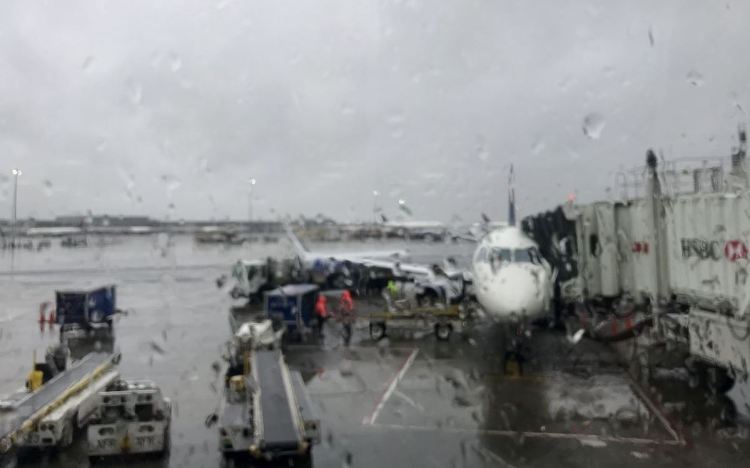
Flight Waivers, Cruise Itinerary Changes Ahead of Tropical Storm Dorian

As Topical Storm Dorian moves west across St. Lucia and into the Caribbean Sea, airlines and cruise lines are adjusting travel plans.

The storm is expected to dump three to six inches of rain from Martinique to St. Vincent, where a Tropical Storm Warning is in effect, with possible isolated totals as high as 10 inches. Maximum sustained winds are near 50 mph with higher gusts.

Dorian is expected to strengthen into a hurricane before it passes near or south of Puerto Rico on Wednesday and Hispaniola Thursday morning, the National Hurricane Center said. A Hurricane Watch is in place for Puerto Rico and portions of the Dominican Republic, indicating hurricane conditions are possible within 48 hours. The storm center will continue into the Bahamas region.

It is too early to determine if Dorian will become a threat to South Florida, according to the National Weather Service Miami-South Florida.

Almost all airlines that operate flights to the Caribbean have issued a weather advisory for Tropical Storm Dorian (except United, which has not yet issued a travel waiver).

Delta Air Lines
Waivers are in effect for travel Aug. 26-29 for the following airports: Punta Cana, Dominican Republic (PUJ); Port-au-Prince, Haiti (PAP); San Juan, Puerto Rico (SJU); Santiago, Dominican Republic (STI); Santo Domingo, Dominican Republic (SDQ); and St. Lucia (UVF). Tickets must be reissued by Sept. 5. When rescheduled travel occurs beyond Sept. 5, the change fee will be waived.

Jet Blue
The airline will waive change/cancel fees and fare differences for customers traveling Wednesday, Aug. 28 through Thursday, Aug. 29 to/from the following cities: Aguadilla, Puerto Rico (BQN); La Romana, Dominican Republic (LRM); Ponce, Puerto Rico (PSE); Puerto Plata, Dominican Republic (POP); Punta Cana, Dominican Republic (PUJ); San Juan, Puerto Rico (SJU); Santiago, Dominican Republic (STI); and Santo Domingo, Dominican Republic (SDQ). Customers may rebook their flights for travel through Sunday, Sept. 1.

A waiver is also in place for Barbados (BGI) and St. Lucia (UVF) for Aug. 26-27. Customers may rebook their flights for travel through Saturday, Aug. 31.

American Airlines
Change fees are waived from Aug. 26-29 for the following airports: Bridgetown, Barbados (BGI); Cap Haitien, Haiti (CAP); Fort de France, Martinique (FDF); Port Au Prince, Haiti (PAP); Puerto Plata, Dominican Republic (POP); Punta Cana, Dominican Republic (PUJ); San Juan, Puerto Rico (SJU); Santiago, Dominican Republic (STI); Santo Domingo, Dominican Republic (SDQ); and St. Lucia, Saint Lucia (UVF). Rebooked travel must occur between Aug. 26 and Sept. 5.

Southwest Airlines
Travelers flying to or from Providenciales, Turks And Caicos Islands (PLS); Punta Cana, Dominican Republic (PUJ); and San Juan, Puerto Rico (SJU) from Aug. 26-30 can rebook in the original class of service or travel standby.

Cruise lines
Two Royal Caribbean ships will change itineraries to avoid the projected path of the storm, according to the cruise line’s official blog. Harmony of the Seas has changed from an Eastern Caribbean itinerary to a Western Caribbean itinerary, to include Perfect Day CocoCay, Cozumel, Roatan, and Costa Maya.

Symphony of the Seas has changed her itinerary and is skipping a scheduled stop at St. Maarten, while adding a visit to Perfect Day at CocoCay at the end of the sailing.

Allure of the Seas has changed from an Eastern Caribbean itinerary to a Western Caribbean itinerary.

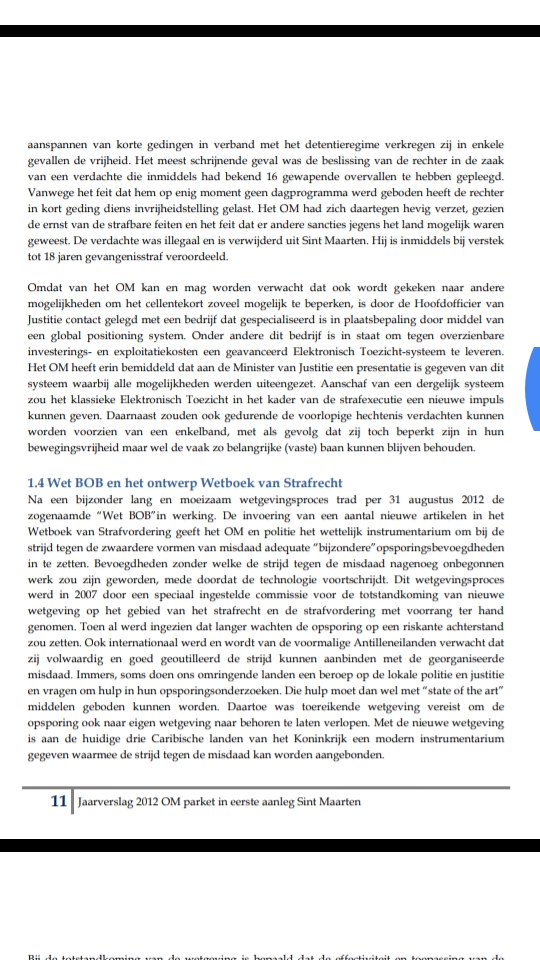
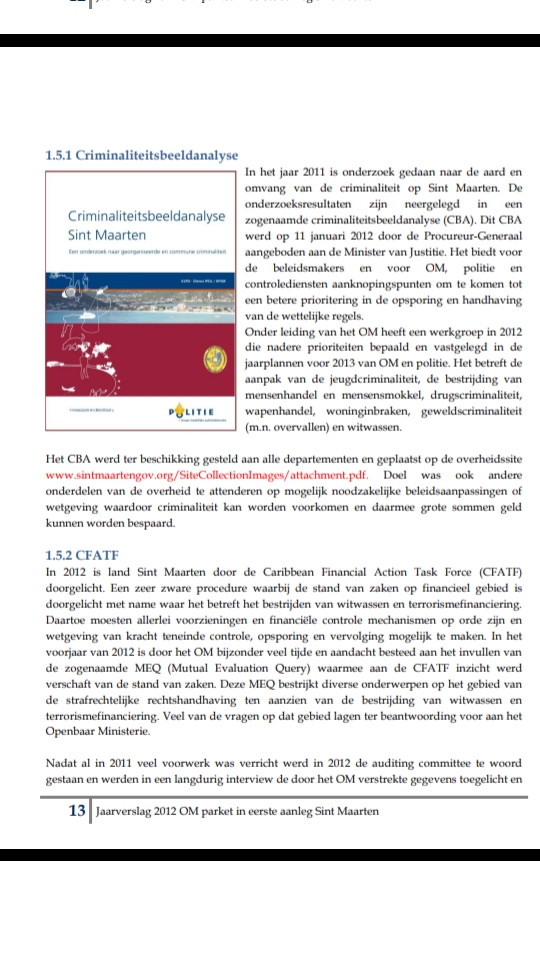
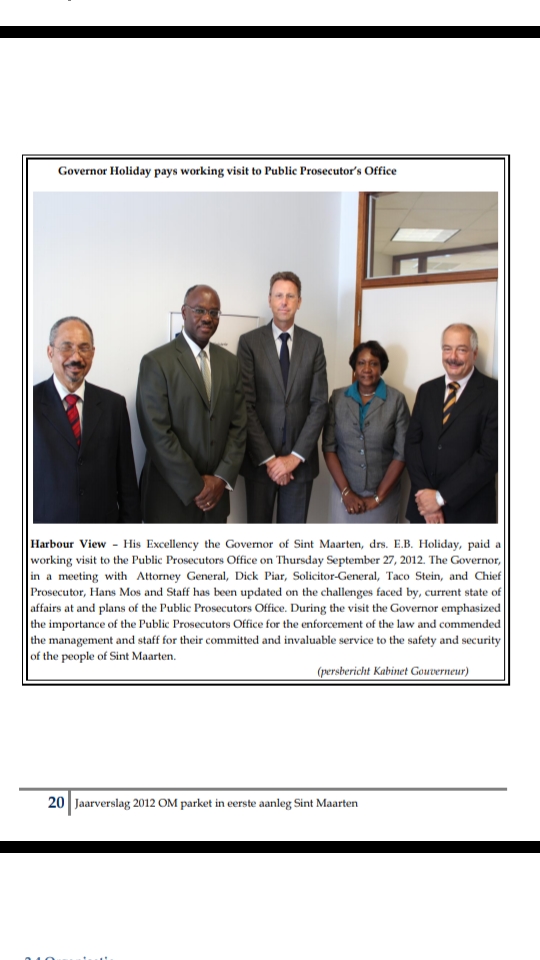
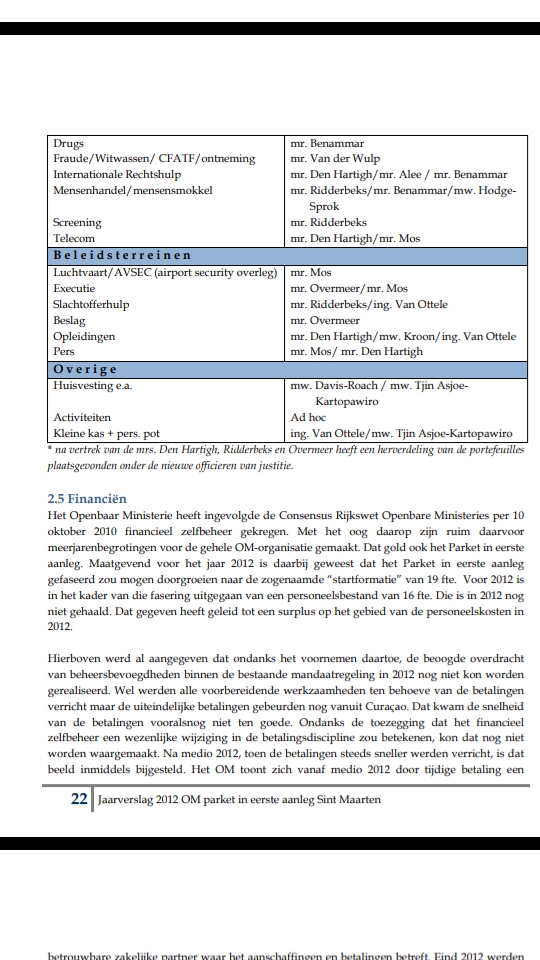
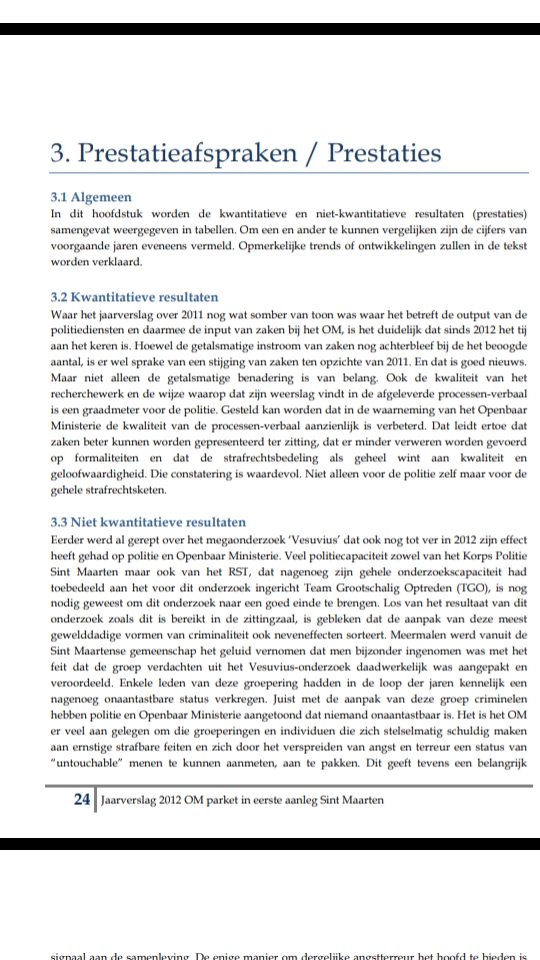
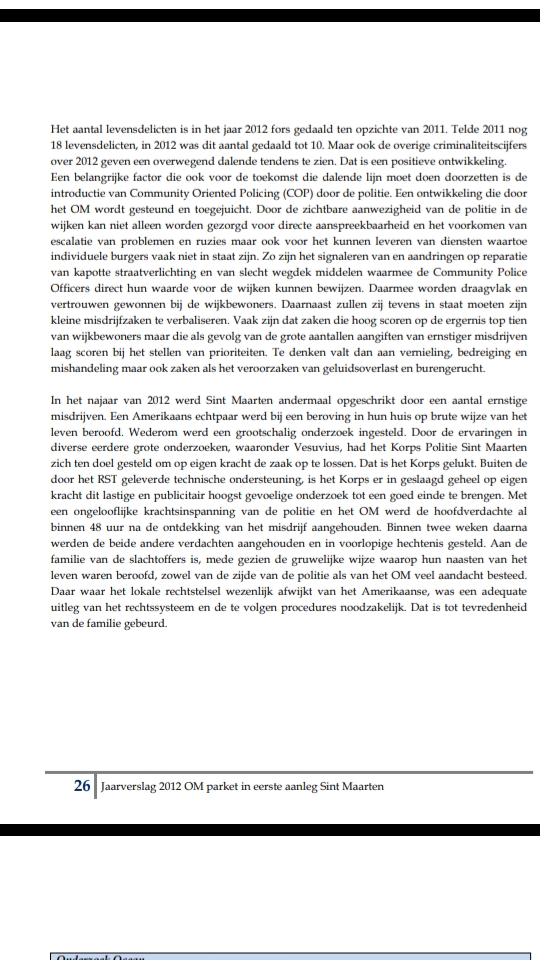
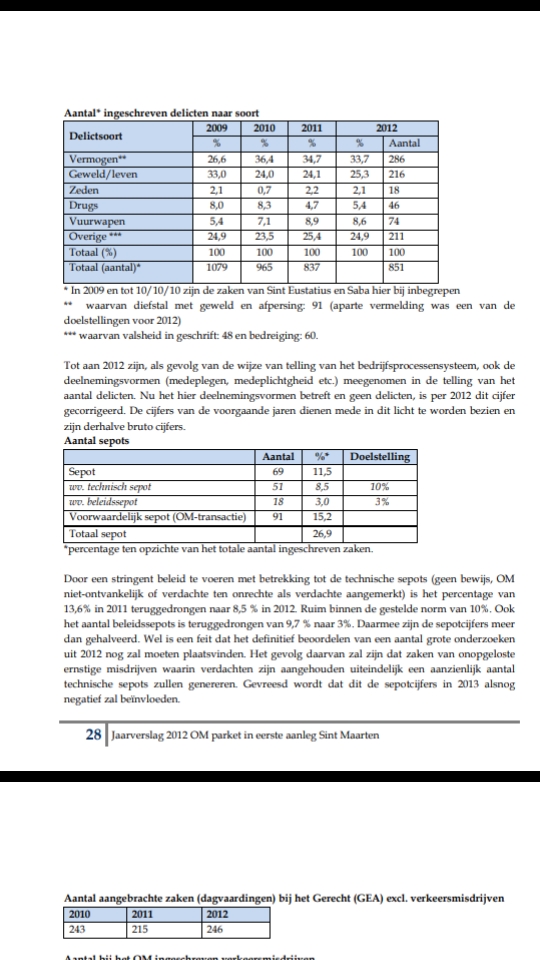
Who is X? The Sint Maarten Openbaar Ministerie / Prosecutors Office are also Corrupt, Criminal & Crooked

X worked as a public prosecutor (OVJ) for the Ministry of Justice and Securities. In October 2012, she was appointed OvJ on Sint Maarten for three years and moved to live there.

In her IB 2013 declaration, X requested an exemption from national insurance contributions. The assessment was imposed in accordance with the declaration. The inspector then applied an additional assessment notice pursuant to Article 16 (2) (c) of the AWR, because X was obliged to insure national insurance in the Netherlands during her appointment to Sint Maarten on the basis of Article 3 (2), Decree on expansion and limitation of the circle of insured national insurance schemes and was liable for national insurance contributions. X appealed and stated that, partly because of statements made by the SVB, it was not known to her that the assessment had been set too low, so that she could assume that it was correct. The Noord-Holland District Court ruled that Ms X could not have derived any confidence from the SVB that she was not liable for national insurance contributions in the Netherlands. According to the Court, this meant that the error made in determining the IB 2013 assessment by not mentioning the national insurance contributions owed on the assessment was reasonably known to X. Pursuant to Article 3 (2) of the Decree on Expansion and Restriction of the National Insured Persons Insurances 1999, X was obliged to be insured for the national insurances, so that it had reasonably been known to her (in the objectified sense) that the IB 2013 assessment was incorrect on this point. According to the Court, this did not change the fact that this was not the case with X personally due to an incorrect understanding of the law. The Court dismissed X’s appeal as unfounded.————————–

Tax news of the day

The complete messages can be read via the daily e-mail service Viditax . Viditax is part of the Fiscaal up to Date Premium subscription.

Short Cruises Account For One Third of Caribbean Market

Short cruise, two to five days, will account for more than one third of the Caribbean cruise capacity this year, according to the 2019 Cruise Industry News Annual Report.

Carnival Cruise Line dominates in the short cruise market with an estimated passenger capacity of more than 2 million (double occupancy); Royal Caribbean International at 1.1 million, Bahamas Paradise at 522,000 and Norwegian Cruise Line just north of 400,000. All four have increased their short cruise capacity from last year.https://www.cruiseindustrynews.com/cruise-news/21193-short-cruises-account-for-third-of-caribbean-market.html
SXM Chef Merges Upscale NY Eateries

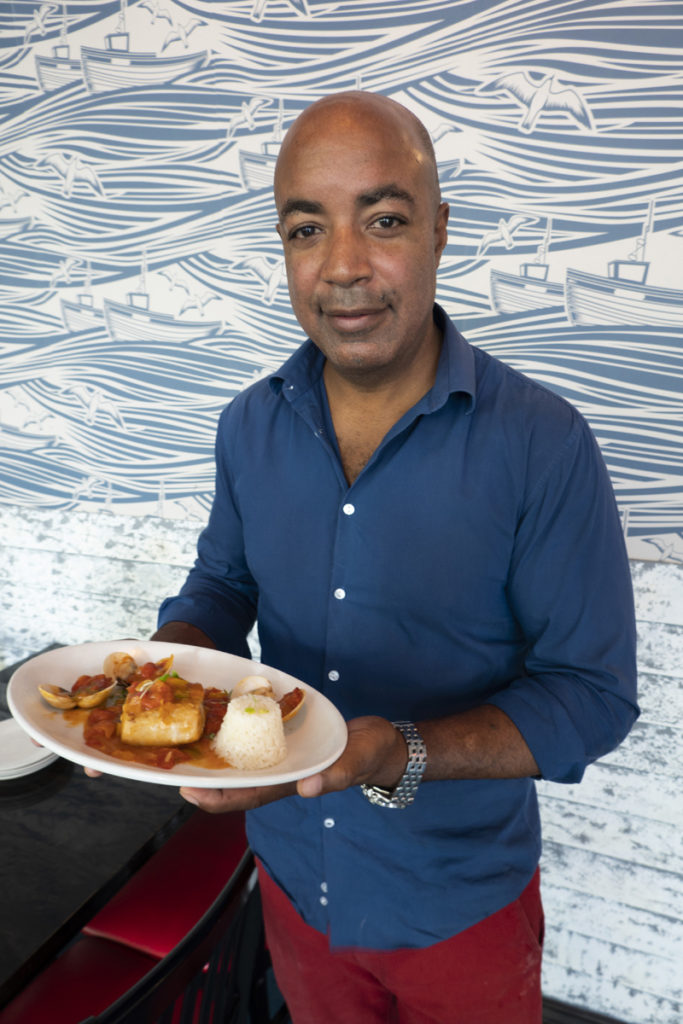
The 5121 Food Hall & Bar in Hyde Park merges upscale eateries. With their popularity rising amidst glowing reviews, Red Fish Bleu Fish, Porkchop and The Hyde Speakeasy, all located under one roof at 5121 S. Harper in Hyde Park, are now morphing into the 5121 Food Hall & Bar. The new name reflects the wide variety of food and drinks that are available in this stylish space. Red Fish Bleu Fish has launched a new menu, incorporating new dishes from Executive Chef/Partner Kenneth Robinson.
While the main emphasis is on fish and seafood, the menu now includes a variety of excellent USDA prime steaks, adding to the “something-for-everyone” food selection. Guests can choose from a wide range of starters, soups, salads, pasta and rice dishes, meats, fish and seafood entrées, “build your own” seafood boil and street foods.

“We continue to expand our menu to please the desires of our growing fan base,” said owner Jovanis Bouargoub. “In addition, we’ve recruited our former chef at Porkchop, Kenneth Robinson, to become Executive Chef/Partner, heading up the entire kitchen operation. He will continue to develop the menus of all three venues at the 5121 Food Hall & Bar.” Chef Robinson brings Caribbean inspiration with its bolder flavors to the Red Fish Bleu Fish menu. He is a native New Yorker who now divides his time between Chicago and Sint Maarten in the Caribbean, where he heads the kitchen at the two Greenhouse restaurants located on the Dutch side of the island.

Robinson believes that to excel as a chef, there are three keys to success: First, chefs must have a vision of the food experience they want to impart to their guests and make sure it is in sync with what the guests want. Second, they need to be able to execute that vision, and to do so, thirdly, they need to be extremely organized. “No matter what type of cuisine you are cooking, every great chef must be able to achieve these three objectives,” he said.

Starting at a young age Robinson, the son of a career Army engineer, was frequently on the move. He grew up in Manhattan’s Upper West Side where he was always around a myriad of cuisines. But his father’s career took the family to a variety of military bases in the United States including Hawaii and to Europe.

Robinson acknowledges that pursuing a career as a chef was quite natural. He agrees with the old maxim that chefs are born, not made. He always loved to be around food and was fortunate to be exposed to a variety of cuisines through his frequent moves. He enrolled in Le Cordon Bleu in France where he built his foundation and developed a large network of culinarians, who opened the door to cooking jobs in a variety of restaurants. His first focus was on country French bistro-style cooking in Montpelier and Toulouse.

Always eager to learn and having an adventurous nature, through the years Robinson has made it a point to try out new opportunities in new locales—from France to New York and on to Rio de Janeiro. His next move was back to Chicago where he opened his own and also worked at numerous restaurants.

Lunch, dinner and weekend brunch are served in this casual and lively restaurant with a friendly staff, delicious comfort food and full bar. The kitchen is always open late. Happy hour specials run weekdays from 4 to 6 p.m. along with featured daily specials. Lunch is served from 10:30 a.m. to 3 p.m. on weekdays. Dinner is served from 3 p.m. to midnight on weekdays and 3 p.m. to 2 a.m. on Friday and Saturday. Brunch is served from 10:30 a.m. to 2 p.m. on Saturday and Sunday.

The Hyde is a unique Chicago speakeasy, an innovative concoction of art, live music, food and drinks. Evoking the sensual, friendly vibe of a 1920s gathering spot, The Hyde is a late-night spot with an exceptional cocktail program, a special cognac bar, and a discreet, sophisticated atmosphere. The speakeasy is open until 2 a.m. on weekdays and 3 a.m. on weekends. During weekdays, access The Hyde through the hidden door inside of the Red Fish Bleu Fish restaurant. On weekends, enter through the main door at 5115 S. Harper in Chicago.

https://chicagocrusader.com/the-5121-food-hall-bar-in-hyde-park-merges-upscale-eateries/

LARA: Menzies Aviation extends ground handling licence at… PJIA

Menzies Aviation, the global aviation logistics specialist, announced on 27 August the extension of its ground handling licence at Princess Juliana International Airport, on the Caribbean island of Sint Maarten.

The five year extension will see Menzies deliver its premium ground handling offering up until December 2026 and will represent over 7,700 aircraft turns per annum for multiple airlines operating at the Caribbean Airport. Menzies recently invested in new equipment and vehicles at its Sint Maarten station, in order to improve the passenger experience.

Giles Wilson, CEO, John Menzies plc said:“Sint Maarten is an important station for us in the Caribbean, and the extension of our ground handling licence at Princess Juliana International Airport clearly demonstrates that airport management have confidence in our services. Menzies’ team of professionals have been delivering a premium ground handling service in Sint Maarten since 2001, and I look forward to working with airlines flying to and from the island for an additional five years.”

https://www.hmgaerospace.com/news/lara/menzies-aviation-extends-ground-handling-licence-at-princess-juliana-international-airport/

Tropical Storm Dorian hurls toward Caribbean islands; Puerto Rico under hurricane watch

Residents in Caribbean islands are bracing Tuesday as Tropical Storm Dorian moved across St. Lucia and into the eastern Caribbean Sea, heading toward Puerto Rico.

Tropical storm warnings and watches were in effect for several islands, including Martinique and St. Vincent and the Grenadines, the National Hurricane Center said.

Puerto Rico and the Dominican Republic’s east coast, from Isla Saona to Samana, were also under hurricane watch Tuesday morning, meaning hurricane conditions were possible within the area.

Dorian was about 15 miles west-northwest of St. Lucia at 8 a.m. Tuesday and forecast to strengthen over the next 48 hours, the National Hurricane Center said.

The storm was moving at 13 miles per hour west-northwest, with winds near 50 miles per hour, according to the hurricane center.

The storm is forecast to bring between 3 to 6 inches of rain from Martinique to St. Vincent with isolated areas up to 10 inches, the weather service said. Flash flooding was also possible in areas with more than 4 inches of rain.

Forecasters expected Dorian to intensify as it approaches Puerto Rico in the next day and pass near or south of the U.S. territory Wednesday, bringing between 2 to 4 inches of rainfall.

In Barbados, the government warned citizens to remain vigilant.

Minister of Home Affairs Edmund Hinkson said the storm “is said to be weakening … but we are not out of danger yet.”

Little damage has been done by the storm as of yet, though there were reports of power outages on the eastern Caribbean island.

“We are expecting the worst,” said St. Lucia Prime Minister Allen Chastanet, who announced that everything on the island of nearly 179,000 people would shut down Monday evening.

Cruise lines sailing out of Port Canaveral, Florida, started rerouting their ships from the eastern to the western Caribbean to avoid the storm.

Residents of Puerto Rico, where about 30,000 homes with blue tarps provide a reminder of the devastation caused by Hurricane Maria nearly two years ago, lined up at stores to stock up on supplies such as food, generators and bottled water.

Puerto Rico Gov. Wanda Vázquez on Monday declared a state of emergency and provided a list of all the new equipment that public agencies have bought since Hurricane Maria.

“I want everyone to feel calm,” she said. “Agency directors have prepared for the last two years. The experience of Maria has been a great lesson for everyone.”

Public schools will also close Tuesday afternoon, and the island’s 360 shelters will remain opened for those without proper roofs, she said.

The Hurricane Center said wind and rain impacts are possible in the Bahamas and Florida, but uncertainty remains high.

https://www.usatoday.com/story/news/weather/2019/08/27/dorian-tropical-storm-forecast-hurl-toward-caribbean-islands/2128054001/

PASSENGERS IN DANGER Royal Caribbean cruise ships forced to change itineraries – due to hurricane

Hurricane Dorian is currently raging in the Caribbean. For this reason, the cruise company Royal Cruise has drastically changed its routes.

Tropical storm Dorian is currently threatening the eastern Caribbean. The cruise companies also feel that. The hurricane is currently moving towards Barbados. Due to developments, Royal Caribbean has changed the itinerary on some cruise ships.

According to the portal IBT, Royal Caribbean is the first cruise company to change its shipping routes. This is to ensure that cruise passengers are no disadvantages due to the weather conditions, it says.

So the “ Harmony of the Seas” , one of the largest cruise liners in the world , will go a different, seven-day route than originally planned: Instead of cruising through the eastern Caribbean, the ship will sail the west of the Caribbean. Too big was the danger emanating from Hurricane Dorian.

These places are currently threatened by Hurricane Dorian

Like the National Hurricane Center loudtold IBT , following Caribbean territories in terms of hurricane Dorian are at risk:

Efforts to stem lethal coral disease found in St Maarten & other Caribbean Islands soon underway

WORK to help save the TCI’s precious reefs from a highly contagious coral disease already detected around three islands is poised to begin within days.

TC Reef Fund chiefs said they hoped to start treatment which includes administering antibiotics to areas infected with deadly stony coral tissue loss disease (SCTLD) shortly.

The NGO had been waiting two months for a permit from the Government to enable them to begin, without which they are prohibited from taking action.

Conditional permission was finally received on Tuesday (August 20), which will kick-start efforts once environment chiefs are satisfied with the suggested methods.

SCTLD has been described as the most virulent coral disease the world has ever seen. It is said to affect more than 20 species found in the TCI and has a mortality rate of around 80 percent.

Its rapid-fire contagion has seen it impact half the stony coral species on the Florida Reef, where it was first detected in 2014.

It was discovered in Jamaica in February 2018 and has since spread into Mexico, St Maarten, the US Virgin Islands, Dominican Republic, the TCI and, most recently, Belize.

“When you go to some of these areas where the disease has been prevalent for a few years, it’s like looking at the moon,” said Karen Neely, a coral ecologist at Florida’s Nova Southeastern University.

“You can swim and swim and swim and not see a single living coral.”
Neely told the Weekly News the disease was moving across Floridian reefs at approximately 15 kilometres a month.

“Every day, countless numbers of corals are infected and lost,” she said.

“In Florida, we didn’t have the opportunity to start interventions and other actions early on.

But it is hoped that the Caribbean will have that opportunity and will take advantage of it in the hopes that the disease can be better controlled, or potentially even eradicated at some sites, thus preventing the loss of the corals and the ecosystem services they provide,” Neely added.

Meanwhile, both the TCRF and Department of Environment and Coastal Resources (DECR) have renewed calls to Islanders to take urgent precautions to curtail further transmission.

Well-meaning divers attempting to help may be inadvertently exacerbating the problem, Stark warned.

“Some dive operators have been attempting to help by clearing away diseased tissue from infected coral heads.

“Because SCTLD is a bacterial pathogen, these activities are probably spreading the disease,” he said.

Official advice includes immediately reporting all possible sightings of the condition – which typically appears like patches of white exposed skeleton and can be easily mistaken as bleached coral – to the TCRF and DECR.

People should not touch any affected coral as this can spread the disease. And all diving and fishing gear used in such areas should be disinfected with a bleach solution, or special tablets available free from the TCRF.
Diving and fishing at known infected sites should also be avoided.
To date, SCTLD has been sighted off South Caicos, West Caicos and Providenciales. The TCRF and DECR are working together to implement a plan of action.

Earlier this month, a representative from each body attended a training workshop in Florida to learn more about treatment techniques.

The Reef Fund remains hopeful its bid for a $150,000 grant from the UK’s Darwin Plus scheme will be successful.

In the meantime, Stark has been busy testing a new, recently received underwater drone which will help provide a fast, thorough analysis of the reefs and highlight any additional affected spots.

“This is a serious disease because it affects many star and brain corals as well as the Caribbean’s iconic but rare pillar coral,” said Judith Lang, of international conservation organisation, the Atlantic and Gulf Rapid Reef Assessment (AGRRA).

“Important reef-building elkhorn and staghorn corals are immune, as are the common finger corals,” she told the Weekly News.

There was a glimmer of hope in that some colonies of the susceptible species had survived, either partially or completely, on reefs exposed to SCTLD.

These “resilient survivors”, Lang explained, might help eventually restore reefs, in the same way nursery-grown elkhorn and staghorn varieties have helped repair habitats damaged by ocean warming and other threats.

Lang encouraged TCI-based fishermen and divers to report sightings of resilient-appearing colonies of pillar, star and brain corals. This could improve knowledge of how SCLTD spreads in places lacking large human populations, she said.

Lang warned that while antibiotic applications had shown success in treating the illness, there were also “valid concerns” that this might have the unwanted side effect of helping develop antibiotic-resistant bacteria.

Alternative approaches involving experimental applications of modelling clay, underwater epoxy or cement are being developed and will be disseminated in the Caribbean, she added.

Photos: The day the world’s most famous aviation plane and beach met

In 1989, an Air France Concorde made a very special flight to the Caribbean island of St. Maarten. It would be the only time in history that the world’s most iconic airplane and beach would ever meet.

The Concorde landed at Princess Juliana International Airport in St. Maarten, and the airport itself did not forget the memorable day. The photo you saw above remains on a panel display at the airport just after the security screening at the terminal.

Note in the image that there is almost no one with cameras. Nowadays, on Maho Beach where this picture was taken, until the daily arrival of the Boeings 757 attracts a happy crowd with dozens of cameras and cell phones. And there’s no talking then about the few days when the KLM 747 Jumbos flew from Amsterdam to Amsterdam, easily joining a thousand people with their capture-ready DSLR cameras.

But fortunately there were already aviation freaks back then, who even videotaped the only landing of Concorde history in St. Maarten.

https://www.aeroin.net/dia-se-encontraram-aviao-praia-mais-famosos-aviacao/

Design a site like this with WordPress.com
Get started